


Last Candidate Standing: Rounds 2 to 7 Play-by-Play
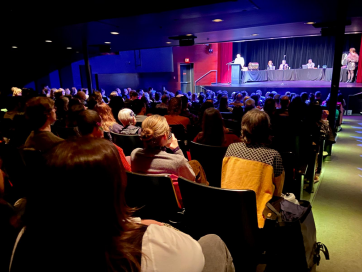
For a play-by-play of Round 1 of Last Candidate Standing please see our earlier blog post.
ROUND 2: 22 Candidates. Six sets of three candidates, one set of four candidates. Two passes issues per set. 45-second answers.
Question 2.1: City council recently voted on the Capital Plan, which outlined the city’s spending over the next four years. In this Capital Plan, the City deviated from the recommendations of the Park Board with regards to which community centers would be prioritized for upgrades and renewal in the coming years. Would you overturn the City’s existing Capital Plan, and if so, how would you determine which community centers move to the top of the list for upgrades and renewal?
Soloman Yi-Kieran (COPE – Council) - When it comes to planning for recreation, the City Council does not know ball. The Park Board had a clear list of which community centers needed funding the most. City Council ignored that. They ignored Sean Orr’s motion to get those community centers back on the list. And instead, ABC voted to provide funding to the city community centers that voted for them mostly. That’s not how government should work. That’s not how funding should be allocated. So yeah, we’re going to review that. We’re going to overturn that. We’re going to make sure that there is equitable funding to community centers all over the city, especially the ones that are left behind in South and East Van.
Ibrahima Cisse (Bright Future Vancouver – Council) - Yeah, so this is a really important issue that we’re going through, especially with different places like Mount Pleasant. Obviously, there’s Templeton, for example, that’s the pool I went to when I was younger. and there’s just a lot of uncertainty when it comes to it. So something that, of course, working with the Park Board is key, and the fact that it was almost abolished is abysmal. So that’s something that we need to make sure that we protect our community centers. We make sure that we’re really aligned with communities, because for me, that’s where I grew up. I grew up in community centers. I think it’s super important to protect it. So for me it would be collaborating with the Park Board. Thank you.
Geoff Teoli (Vote Vancouver – Council) - First of all, the answer is yes. We need to overturn it. We have some incredible candidates in the Park Board running with us, Stephen Menon and Summit Wanmaker, and I talk to them a lot about this. You know, there’s an incredible thing that’s happened. All of the community centers in this area have already gotten together, and amongst themselves, have determined how they think their priorities for upgrades and renewables need to be. That’s an incredible amount of work, and it’s such an accomplishment to think that so many different people, all with their own needs, have already agreed to what that process is supposed to be and what that hierarchy of improvement is. So we don’t need to do anything else. It’s already been done. This is just another example of ABC making campaign pledges for specific audiences and not listening to the people that have already committed to doing the work.
Soloman Yi-Kieran and Geoff Teoli advance.
Question 2.2: This year’s ballot in Vancouver will include two plebiscite questions. One of them involves involuntary care, a subject that Katie already asked about just a little bit earlier. The other question involves the use of hard drugs and fentanyl in public spaces like parks and sidewalks. ABC Vancouver is not here tonight, but their members have argued that Vancouver police should be empowered to seize people’s drugs and hand out bylaw tickets for public drug use. The tickets would have no monetary penalty, but the Mayor has argued that this could be a useful step towards re-establishing social norms around public drug use. What do you think about this idea? Should anything change in the way that Vancouver and its police handle public consumption of hard drugs and public intoxication.
Annette Reilly (Green Party – Council) - I have to say this before Pete gets up here because it’s all his talking points. Okay, so what we’re talking about here is people who are addicted to drugs. They have these drugs on their person, cops taking those drugs away is not going to fix their addiction. It is a health crisis. It is a health issue. They’re just going to go out and they’re going to buy more drugs, or they’re going to do more nefarious things to try and get money to buy those drugs. That is going to increase crime and is not going to decrease crime. Which means that the police will then need more money to go out there and do more arresting and steal more drugs, and it’s a never-ending cycle that we need to get rid of. We do not need to be taking those drugs away
Pete Fry (Green Party – Mayor) - I mean, she did kind of take my talking points, but yeah, the fact of the matter is confiscating people’s drugs is not going to solve addiction. It’s not going to get people sober. It will drive them into more desperate situations. It will drive them to hide from the authorities and do drugs in the alleys and possibly overdose and die alone. It is a horrible policy idea. It is brutally inept and callous. It is just wrong on all sorts of levels, and it will exacerbate more survival-based crimes. There will be more people breaking into cars. Taking people’s drugs is not the solution. You can use the threat of taking people’s drugs to coerce them, maybe into supervised consumption sites. I would be supportive of that, but that’s not what ABC is proposing. They really are proposing a punitive and gross approach.
John Boychuck (Vote Vancouver – Council) - Well, here we are. We’ve already heard that this plebiscite is really a waste of money. Can I just get a round [of applause] for those people who really believe that this current government has wasted our taxpaying dollars on this plebiscite? So that’s the first. And second is: where’s the compassion? Where are our opportunity to actually help people up? They don’t want a handout; they want to hand up, and how do we do that? We create the programs, we give them the opportunity, and we get them off the street. The only way that that happens is with partnerships and partnerships that should have already been worked on by a leader who did not put out the ask and did not get the help. So we need a change, and we need that change now.
Annette Reilly and Pete Fry advance.
Question 2.3: City staff and police say that street sweeps, a.k.a removing belongings of people living on those streets, are necessary for health and safety. People whose belongings are taken and the organizations that work with them say that these sweeps extend their time living rough because their important documents, medications, aid, and other necessities are lost, and getting them replaced takes time away from seeking housing. How would you balance the competing needs of dignity, respect, and safety for people experiencing homelessness and keeping sidewalks accessible for all?
Andy Lin (Bright Future Vancouver – Council) - So in terms of the street, street sweeps are really detrimental to the state of the Downtown Eastside and Vancouver as a whole. All it really does is spread the problem around. It doesn’t really address the root causes of poverty, drug addiction, and homelessness. Right? We at Bright Future Vancouver really want to address those with a City-run grocery store program to provide low-cost groceries, a rent-to-own program to ensure that people stay in houses, supportive housing, things like that. When we go into the street, waste our tax money with police to just barrage and like clean – quote unquote – clean up the street. But the thing is, the next day the people are back there; they’re defecating on the street because there’s no public bathrooms. And that’s why I’m also campaigning for more public bathrooms so people don’t have to pee on the street.
Lucy Maloney (OneCity – Council) - Very serious topic, so I’m not going to use some of my random props here, but I think that you should definitely let me continue so you can discover what mysterious things I have in here. It is a serious topic, and we do have to do it justice. There is a balance of needs between keeping safety, from preventing fires, keeping sidewalks safe. But it’s so cruel to steal people’s things, and we need to support things like the Kettle Society, which runs a document storage area, so that people don’t lose their ID and they can still apply for benefits. That’s the kind of social services we need to fund instead of just a police…
Keerit Jutla (Vote Vancouver – Council) - We need a city hall that governs for everyone, rich and poor, no matter your background, Rebecca Bligh said that to me, and that’s what inspired me to run with this, with this group. If we don’t govern with principles, no matter how difficult applying those principles are objectively and universally, then anyone can exercise their power in the way that they deem fit. We have a mayor who tries to censor and shut down and malign another counselor because of what he said – abuse of his own power. And if leadership like that continues to say, “I’m going to fund whoever I want and give them a free pass to use the powers they want,” we don’t have a democratic society. Thank you, Rebecca.
Andy Lin and Lucy Maloney advance.
Question 2.4: So after the deadly heat dome of 2021, there was significant discussion surrounding the need for improved green space, cooling centers, and bigger investments in known urban heat islands throughout the city, specifically in areas in East and South Vancouver. However, many residents of these neighborhoods have voiced concerns that more substantive investments in keeping vulnerable neighborhoods cool have not yet been made. How would you plan to protect against climate-related hazards like extreme heat, specifically in urban heat islands like South Van and the Downtown Eastside?
Iona Bonamis (OneCity – Council) – This is my jam. I do have an environmental background, so I […].So climate has always been one of the biggest reasons for why I’m doing this work as a transportation urban planner, and yeah, as a parent, I’m very concerned about our kids’ future, whether or not they’ll be able to continue to live here safely is why I decided to run for council. So I think there are a few things that we need to do. We need to start retrofitting our most vulnerable homes with cooling devices. We have in our platform to retrofit the 500 most vulnerable households with cooling devices. We also want to put solar panels on our schools, libraries, and community centres…
Patrick Sauriol (TEAM – Council) - So I live in Champlain Heights, fantastic place, lots of green space, wonderful place, but we need more of that in Vancouver. We need to make sure our trees are kept, the big old growth. We also make sure that we have adequate green corridors all over the city. I was talking with a lady today from Free the Fern. I think she’s here. She might be in New York. There we go! She’s got brilliant ideas about how to expand this, and in her words, like “franchising” across the city. We need more of that. We need that all across the city. We need a city that’s going to be able to support that, and people in office that will realize that this is the future. And I hope I get gonged out in one second .Do it. All right. That’s a lifelong dream just accomplished.
Frances Bula (OneCity – Council) - So I’m running with Iona. We’re on the same team, and obviously I endorse every one of her ideas. I had a really personal experience of the heat dome. I live one block off Broadway. My street was amazing. It was so cool because it’s lined with horse chestnuts, and I lived in an older house that has porch overhangs on both sides. So we were really comfortable. If I went over to Broadway and stood there, it was 10 degrees hotter. […] I think people don’t think that Vancouver is a city that needs to have heat protection methods or mechanisms because obviously we think it rains here all the time and it’s not true. But we have to incorporate design for cooling ….
Iona Bonamis and Frances Bula advance.
Question 2.5: What is a specific initiative or idea or policy from another city—it could be elsewhere in Canada, somewhere else in the world—that you would like to see adopted in Vancouver? And what should City Hall do to make this happen? This could be something involving housing or the use of public space, public safety, finance, whatever. Something from another city, being as specific as you can.
Jonathan Weisman (TEAM – Council) - So I’m going to go up right first because this actually fits in with what I’m wearing here and fits into two other things. I was born in Toronto. I moved here 17 years ago, and I know being born in Toronto is a strike against me already, but let’s carry on. When I grew up, there was a set of signs all across the city. Now this is very simple, it’s very straightforward. You know, those signs said, they said, “Please walk on the grass.” The idea was the public spaces, the green spaces, the park spaces. Those were to be used, and we wanted to encourage people to do that. And I’ll tell you, the opposite has been happening during COVID. When kids built themselves a little BMX course, a tiny section of forest within a park out on the West End, do you know what the City did? They put in some signs that you’re going to damage the tree roots. You need to stop this immediately. Kids doing that, families walking in the grass….
Caitlin Stockwell (OneCity – Council) - Something that I would like to see Vancouver do is build public housing on public land or affordable housing on public land. This is something we see in other cities in the world, including Vienna, and we have City-owned land right now that could be used to provide affordable housing units for people who live in Vancouver. ABC tried to do this, but they proposed doing it with market rents and use that to lower people’s property taxes. We should be using public land for public good. Something else we would like to see is the solar panel model I was talking about is actually done in New Westminster and people can subscribe to it and the credit goes on your BC Hydro bill and then you can have solar panels even if you have an apartment building and it helps manage our load as we transition…
Sean Orr (COPE – Council) - You may know me from the cover of the Georgia Straight today, where I was nominated… I was in third place in “Best Local Hero” behind somebody named Terry Fox and David Suzuki. I;m not sure, but anyway, so there’s this. Caitlin stole my answer, Vienna is a good one, but there’s this little city called New York, where a guy was just elected as a bold socialist, named Zoran Mamdani. And we have to do everything that they’re doing. There are possibilities. They’re a city state, but free transit, expanded child care, while also reducing crime. It’s incredible what they’ve been able to do, to to have bold ideas and stick with it and not be ashamed of being a socialist… (–
Caitlin Stockwell and Sean Orr advance.
Question 2.6: Vancouver has a reputation for working with for-profit developers who have not delivered on their projects, sometimes requiring financial bailouts or community contribution concessions. If elected, how would you approach a development proposal from a for-profit developer with a poor track record?
Devin Clemens (Vancouver Liberals – Council) - I would first say that we’ve had a serious accountability issue for the last four years, and I would even go back further. We have cases of this, like what happened in Little Mountain with the affordable development there and the constant bailouts going toward Holborn and other developers of that nature. We need to hold these developers to account. They can no longer get free passes at City Hall and concessions on their non-delivery of their building commitments. We need to have accountability at City Hall. We need to hold those developers to account by making sure they are delivering on their timelines, or there will be penalties that are delivered in those places.
Judith Kasiama (Bright Future Vancouver – Council) - I think it would be really doing a disservice to Vancouverites if we give again these developers the opportunity to continue to move forward after they’ve shown us such track record of failing. So I think moving forward, I don’t even think we should be giving them a chance. We should really work with other smaller developers who are up and coming, build them up and see what they’re delivering. And I think it’s like giving other people a chance. When we’re continuously just giving those with power more power, that it’s doing a huge disservice to our city and to our local residents. So for me, I’ll open it up to other young and up and coming developers who are very innovative in terms of looking at climate change, affordable housing, and other initiatives. Thank you.
Jarrett Hagglund (OneCity – Council) - We really need to put the screws to developers when they aren’t developing what they promised. We have examples of this in the River District, where there’s a community center that was promised. We have the Municipal Auditor General’s report that puts forward millions of dollars of community benefits that were never actually acted on. This is not okay. So we need to make sure that we are making community amenity agreements where there’s actual teeth there that the City can go after. And we also need to go after people who are just sitting on land and not building Vancouver like they said they would. I’ll use Concord Pacific as an example because they’ve used Northeast False Creek as a land grab for generations, and it’s time that they get to work helping us take down the Viaducts and actually build Vancouver.
Judith Kasiama and Jarrett Hagglund advance.
Question 2.7: The current City Council has approved upwards of 22 hotel projects in the last year alone, citing an industry report that notes a critical shortage of hotel supply in the province. If all of these hotels are actually built, the estimated 10,000 rooms needed by 2050 will be over 70% satisfied in the next few years alone. If elected, would you continue to approve more hotel projects? And if so, how would you balance the priorities of industry calling for increased hotel stock with demand for affordable housing?
Kareem Allam (Vancouver Liberals – Mayor) - I fundamentally disagree with the premise of the question. Industry’s not asking for more hotels in downtown Vancouver. I stand with all the union workers Unite Here Local 40. We don’t need more hotel rooms here in the city of Vancouver. We need more housing for people. We don’t need these hotels in the off-season. We have a tremendous amount of gaps in terms of filling those spaces. Existing hotels are having a hard time filling those spaces in the off-season. We don’t need hotels. We need housing. That’s my priority. That’s the Vancouver Liberal priority. We stand with the Unite Here Local 40 on that pledge.
Rebecca Bligh (Vote Vancouver – Mayor) - You know, I also disagree with the premise that hotels are a priority over housing. I have seen many times these projects come forward, and they lack the flexibility and also the creativity that people need in terms of visiting our city. At the same time, this premise has overrode any sensibility when it comes to displacing housing, affordable housing, for existing tenants, and we saw that with Myron Manor, and I obviously voted against that. And maybe now it is obvious we needed to take a stand on that particular project. We have to recognize Vancouver is a tourism city, and we do need to…
Josh Gordon (TEAM – Council) - At the break, I ordered Canada Dry, and so elbows up and I am curious what the other contestants have done for Canada lately. So the short answer is, I again also disagree with the premise of the question, but what I would say is that we don’t have to choose between them because there are lots of locations for hotels and there are lots of locations for housing. What we should be doing is leveraging the fact that if there is indeed a hotel shortage, that we can actually get significant community benefits from the upzoning that occurs with that. And that is something that the City has fundamentally failed to do recently: capture benefit, public benefit from upzoning. And too often developers have been left off the hook.
Rebecca Hasdell (Vote Vancouver – Council) - I’ll start by saying Rebecca Bligh’s stood up for Canada for the past two years as chair the Federation of Canadian Municipalities, representing 2,000 municipalities across Canada to the dederal government and making sure that municipalities are getting the investment they need. One of the investments that we need is in affordable housing. We have just seen Toronto unlock $2 billion from the federal government because their mayor was willing to work with the province [and]with the feds, on an investment in non-market housing. We can do the same in Vancouver. We want to do that by building more public homes on public lands. We also want to do that working with our faith-based communities who have a social contract to deliver more social good and to use their land to build more housing. It doesn’t need to be an either/or. We can both build housing…
Rebecca Bligh and Rebecca Hasdell advance.
ROUND 3: 14 candidates. Two sets of five candidates and one set of four candidates. Four passes issued per set. 30-second answers.
Question 3.1: Is there a past municipal politician in Vancouver – this is a mayor or a city councilor who did not serve during the current term – is there a past municipal politician in Vancouver whom you admire, and why?
Soloman Yi-Kieran (COPE – Council) - One of my mentors in COPE […]has been Tim Louis. He was an amazing coach, City Councilor back in the day. He was behind getting HandyDART across BC, and in a similar vein, I also want to get more transit expansion across BC. I have been a vocal advocate for the UBC SkyTrain. I led the campaign to push for it to turn from an “if” to a “when.” I want to make sure every bus stop has a covered bench. I want to make sure that we’re getting a low-income transit pass, and I won’t throw this prop to the audience. But please appreciate my Skytrain model.
Lucy Maloney (OneCity – Council) - This is the Socceroos hat. It’s the Australian, FIFA team. As an Australian soccer fan I had a great time walking with the Australian FIFA team through the area where Concord Pacific has failed to develop their land at Northeast False Creek. And one of the reasons I admire Jim Meggs is that he’s relentlessly fought to get the Viaducts taken down and get Hogan’s Alley Society what they need to redevelop that area. Jeff Meggs, you’re a champion.
Rebecca Hasdell (Vote Vancouver – Council) - Vancouver was a leader in what a local level response to climate change could look like. It’s what brought us bike lanes. It’s what brought us investment in parks, and it’s why I have to shout it out to Andrea Reimer as one of the, I believe youngest women who was elected to city government. We should be inspired by what that kind of leadership can look like. We do not have to have a trade-off between affordability and climate. We’ve seen it done, and we can do it again.
Judith Kasiama (Bright Future Vancouver – Council) - I’m going to be completely honest. There’s nobody that I can look back and be like, I feel inspired by. So therefore, that’s why I put my name back here, to be the role model that we need at the moment. So that’s where it’s at because I can’t think of anybody at the moment.
Andy Lin (Bright Future Vancouver – Council) - So one of the people who really inspired me in my early time, like really early on, of actually running with a political party instead of being an independent was Lois Chan-Pedley, part of a certain party. We had a really… she was really friendly, we had a great call. I reached out directly, and she really inspired me to get involved and to represent the young people of the city because we’re getting pushed out. We don’t have a lot of representation now. I don’t preach a Council of 19-year-olds, but I certainly want one to really champion workers’ rights and the right to…
Soloman Yi-Kieran, Lucy Maloney, Rebecca Hasdell, and Andy Lin advance.
Question 3.2: Bus use in Vancouver has dropped in areas where TransLink has made cuts, which lengthens wait times for buses and further sheds riders. How would you convince the transit authority to reinvest in Vancouver?
Rebecca Bligh (Vote Vancouver – Mayor) - I believe we need to bring up the next generation of transit riders in our city. It doesn’t make sense to me that it’s free ride transit from 0 to 12, and then maybe with a U pass or something in college, 18 onwards, you get a transit pass incorporated in your tuition. And yet, if you’re 13 to 18, that’s when you decide if you’re going to pay a transit rider… and you have to pay. And a lot of people can’t afford it. And young people have to buy rides. And we should just make it free for all young people.
Pete Fry (Green Party – Mayor) - So yeah, let’s make transit cool again. Who knows that we have a transit app that TransLink has actually upgraded to the Transit Royale application? It’s amazing that actually we got free Wi-Fi on Transit. And the number one thing to do as mayor: show up for the TransLink mayor board meetings. Our current mayor doesn’t show up for them at all, so that’s where I would say “let’s show up and do the job.”
Jarrett Hagglund (OneCity – Council) - So bus use decreases when they cut services. That’s groundbreaking! I think what we really need to do if we want to get more functional transit, we just show up as a city that we’re really serious. And one of the ways we can do that is by buying Mobi ourselves and making it a publicly owned entity [and] then working with TransLink to make sure that the services are integrated.And if we do that, as well as getting young people on transit and really showing that we’re partners, we can get those funds, and we can make transit cool across the city.
Sean Orr (COPE – Council) - You may have seen me from X or Twitter, where I forgot to delete a bunch of tweets. Yeah. So the question is about funding. The question is how, like, basically, how we convince transit to fund it. We could have done this in 1993, where we could have done a vehicle levy on new vehicles for $75. Now, don’t do the math [but]we would actually have so much money for transit. We could have the SkyTrain to Hope. And yes, I agree. We should show up to the transit boards…
Caitlin Stockwell (OneCity – Council) - There’s two arguments I would make to Translink. One is that 40% of our emissions in Vancouver come from transit [transportation], and investing in alternative transit options now is going to save us some pain in the long run. The second one is buses are the safest form of transit. We’re going to see decreased visits to our hospital rooms because people are safer on buses. We need to invest in safe transit and bus lanes that allow transit to move faster in the city. I would also bribe them like I’m about to do with the judges.
Rebecca Bligh, Pete Fry, Jarrett Hagglund, and Caitlin Stockwell advance.
Question 3.3: The current municipal government announced in early 2025 that it would put an effective pause on supportive housing projects in the city, claiming that other surrounding municipalities were not pulling their way to develop these kinds of properties. Would you continue this pause on new supportive housing projects in the city, and what strategies, if any, would you use to encourage other municipal governments to invest more heavily in supportive housing?
Frances Bula (OneCity – Council) - Okay, I’m going to take this one first, if you don’t mind, I’ve been covering supportive housing and social housing for 30 years, and it’s not true that nobody else is doing anything. That’s just an excuse. A lot of the suburbs have really come a long way, and one of the things I find really upsetting about the no net supportive housing, net new supportive housing in Vancouver, is that Ken Sim wants to lock people up in St. Paul’s for mandatory treatment, and then they won’t have a place for them to go to afterwards.
Iona Bonamis (OneCity – Council) - I would absolutely lift the ban on net new supportive housing. That would actually be one of my first motions if I’m elected to Council. I think it’s egregious that we’re saying that we have a homelessness crisis and then we’re banning supportive housing. We want don’t want to see more and more people on our streets. So yeah, as a lifelong Vancouverite, I know this is a big issue for us. We really need to do this and be a leader and show other municipalities that can do the same thing.
Annette Reilly (Green Party – Council) - Of the almost 3000 unhoused people in Vancouver, over 80% of them became unhoused while living in Vancouver. This is a Vancouver problem that we need to solve. We need to reverse that ban immediately on no net new supportive housing. That would also be one of my very first things that I would like to bring to Council. I told the firefighters that today, and damn it, that’s what I would do. And we need to be investing in our lands… We have a (gong).
Geoff Teoli (Vote Vancouver – Council) - It is no secret that supportive housing is a hill that Rebbeca Bligh is willing to die on. It is also in our platform. It is the very first thing, the motion we’re going to make when we’re elected. And finally, to the question of other cities, what we’re doing now is just telling other cities that it’s not a good thing. The ban is saying to other cities, “You don’t want this either.” But we reverse this and [then] we show other cities “this is how it works.” That’s when they’re going to get on board. Not pushing them away.
Frances Bula, Iona Bonamis, Annette Reilly, and Geoff Teoli advance.
ROUND 4 – 12 Candidates. Three sets of four candidates. Two passes issued per set. 45-second answers.
Question 4.1: Please tell us a specific decision or an incident that you have seen at a Vancouver City Council meeting, or a public hearing, or committee meeting –doesn’t have to be this current term, any time in the past – a specific decision or an incident at Council that you found disturbing, or frustrating, or dumb. Explain why you found it upsetting, and if you’ve got time, well, say what you would have rather seen happen.
Soloman Yi-Kieran (COPE – Council) - So after Ken Sim tried to move his brutal austerity “zero means zero” budget and listening to 600 speakers against it, he said, “Well, that was a waste of time.” That’s crazy. Our mayor should not be actively disrespecting people who go speak to City Hall. That is their right. That is what City Hall is there for. What should have happened instead was, “Oh, thank you. We will not do a brutal austerity budget that cuts parks, that cuts grants, and that cuts all the things that we need to have services in the city.” So that’s what I have done differently. I want to make sure that we have a city government that actually respects people when they come to speak to City Hall. What’s actually going to make it easier and more transparent [is]we need to have a lobbyist registry so that we know who’s whispering in our elected officials’ ears. And we need to have plain language so everyone can access City Hall meetings.
Caitlin Stockwell (OneCity – Council) – That’s a hard one. There’s many e could choose from over the last close to four years. But one that comes to mind is the decision on Myron Manor. There were hundreds of people that spoke out against rezoning that, or having a hotel built there that would have displaced the people who’ve been living in affordable housing with affordable rents for a really long time. And the reason why those tenants didn’t qualify for right-of-return into the building is because it was for a tech worker hotel, and it was on industrial land. We need to be making sure that as development happens in the city, that we have strong tenant protections in place. We need more housing, we need more growth, but we cannot lose affordable housing stock in the process. I work as a lawyer providing pro-bono services for tenants, and there’s ways you can extend tenant protections…
Rebecca Hasdell (Vote Vancouver – Council) - What decision to choose from? There’s beenso many that have been so bad, but I have to talk about the special meeting that was called for the two plebiscite questions. I can think of nothing more damaging to people in our communities who are systemically shut out from decisions than these two questions. And I am worried that when people potentially vote yes, it’s because their “yes” could mean many different things. Their yes could mean frustration. Their yes could mean they want people connected to services. But this is not the way to do it. If Ken Sim wanted a pen pal, we could have set him up with one of the amazing educators in our city. He didn’t need [to spend] $500,000 to write a letter to the public.
Frances Bula (OneCity – Council) - So, as others have said, many to choose from, but I’m going to pick the repeated efforts to get rid of the natural gas ban provision in the city, which a few ABC councilors actually courageously opposed Ken Sim on including Rebecca Bligh, Lisa Dominato, and Peter Meiszner the first time. Then, when they brought it back the second time recently, Lisa and Peter went along with it. And it is a damaging vote that is actually going to go nowhere. And it just goes against what I heard at the public hearing the first time, which is that builders and suppliers have adapted to this. They think it works for them, and it was just stupid to introduce more uncertainty…
Frances Bula advances.
Soloman Yi-Kieran and Rebecca Hasdell tie for second place. The tie is broken by a dance-off, voted on by audience applause. Rebecca Hasdell advances.
Question 4.2: How would you work with an independent Park Board to ensure parks, community centers, pools, and rinks are accessible for all residents?
Jarrett Hagglund (OneCity – Council) - There’s really only one main job that City Council has when it comes to working with an independent Park Board, and that’s making sure they’re properly funded. OneCity has a plan to renew that funding structure, and we’re going to do that. There are other ways. I guess we talked about it earlier, but you cannot override their Capital Plan when they’re basing it on data and the needs of actual communities. And you can also just be respectful and not spend a whole term trying to maybe get rid of them, maybe not, depending on political winds. So yeah, funding, data, and respect.
Iona Bonamis (OneCity – Council) - Yeah, I would absolutely agree with Jarrett. Definitely providing the funding they have asked for, and as a former city staff, I know they have actually even asked for more than what often comes in plans, like the Broadway plan that I’ve worked on. I know there are a lot of community centers that are underfunded, parks that are needed in many parts of the city, including especially in South Vancouver. It’s really a lack of infrastructure there, so the funding is really required there. And also, yeah, just basic dignity and respect for the Park Board, for great job they’re doing.
Andy Lin (Bright Future Vancouver – Council) - So you already heard we would also completely fund a Park Board. But one of the things that City Council can really do is hold big developers accountable when they misdeliver and fail to deliver on the promises, like the River District, where they failed to build a community center, which affects the Park Board because that’s what the Park Board covers: community centers, pools, recreation. To really fund the Park Board is to have real good faith negotiations and to forget the political games that Ken Sim and ABC have made us remember about getting rid of the Park Board or whatever. They are independently elected, and they’re here to serve us, and they’re here to ensure that Vancouver stays fun.
Pete Fry (Green Party – Mayor) - Well, a lot of folks really articulated it. I think, you know, we can just do what we’ve been doing for the last – I’m going to look at Laura Christensen here, 136 years has it been? — that we’ve had a relationship with an independent Park Board in the City of Vancouver, an independent elected Park Board in the city of Vancouver. We actually had a good plan presented by the Auditor General of Vancouver, who said, “Hey, guess what, Council, Park Board, you need to communicate better.” We had an opportunity to communicate better. Ken Sim twisted it and said, “Well, you know, let’s just get rid of them because they won’t do what I say.” The actual reality is: let’s communicate better with Park Board. They are autonomous. They do have sound recommendations for facilities renewals, for park renewals. Park Board is the reason we have beaches and Stanley Park yet..
Jarrett Hagglund and Pete Fry advance.
Question 4.3: Just a few weeks ago, the Vancouver Police Training Academy officially opened ain the historic Woodward’s building in Downtown Eastside, which was supported by almost $5 million from the City. A number of people in the community were upset with the opening of the academy, citing the loss of tax revenue from the closing of London Drugs, the loss of potential uses for the space, and the duplication of police training and associated costs, to name a few. The Justice Institute of British Columbia in New West has traditionally handled provincial recruit training. So, do you think that the VPD needs its own training facility in Vancouver? And if so, do you think that the training facility should remain at the Woodward’s building?
Rebecca Bligh (Vote Vancouver – Mayor) - I have thought about these things for a little while… I don’t think it’s a good site for a training facility. What the Downtown Eastside and that particular area needs is a retailer that knows how to serve low-income communities, and you know, if I was mayor, I would actually have reachws out to this retailer that I have learned about through my work with the FCM, traveling across the country, that serves in low-income communities, and that’s Giant Tiger. Now, I don’t vet them; I don’t know them personally, but I know they are moving west. They just opened a store in Calgary, and what they do is they serve low-income communities. They provide jobs. They provide community outreach. They provide quarterly barbecues. They engage community, and they make sure that low-income folks are not a problem to their business.
Lucy Maloney (OneCity – Council) - I say no to a police training facility in the Woodward’s building. If we did need a new police training facility, and we just did have $4 million to waste, we could put it in the film school building that’s recently closed and not in a shopping center that really needs to have, as Rebecca says, a retailer that suits the needs in that area. So I also have a drink ticket, which I will certainly be giving to the judges, so I hope that I get through again. But I do have more props. I think I still have five seconds. Vote for me.
Annette Reilly (Green Party – Council) - Okay, so this space is also one of my favorite spaces. I love the piano there. I love the stairs that go nowhere. There’s also some art down there which is phenomenal. We haven’t talked about art spaces yet, so I’m not sure if it’s my perimenopausal rage or if I’m just really pissed off about the police being in this building, but I cannot stand the fact that they’re using this. I really think that this was a publicity stunt. I think that this was a means to put the VPD more in the Downtown Eastside, where our most vulnerable people are and are most marginalized by the VPD and other authority figures. They don’t feel safe. and we need to make sure that they can’t…
Geoff Teoli (Vote Vancouver – Council) – This is definitely the wrong place. This is another one of Ken Sim and ABC’s attempt to make headlines and to appeal to a certain group of their base. This is unnecessary. It’s a great example of how not to use City-owned property and land. Because there’s so many better uses for it, and I think the Justice Institute is the right organization to be doing the training, and they’re doing a great job. So we need to make sure we leave that to them to do. And I would say as well that the VPD I think is also worried that Ken’s not going to win because they haven’t endorsed him, right? And this is because they made a mistake when they did that, and not endorsing Ken Sim and the ABC party….
Rebecca Bligh and Lucy Maloney advance.
ROUND 5 – 6 Candidates. Two sets of three. Two passes issued per set. 45-second answers.
Question 5.1: It’s getting late in the evening. Let’s get a bit philosophical. What’s a really great thing about Vancouver, past or present? And if you’ve got time – you’ve got 45 seconds this round – what’s a shitty, the shittiest thing about Vancouver?
Frances Bula (OneCity – Council) – Okay, I’m going to go. Years ago, I toured Richard Florida around Vancouver. He’s an urbanist writer, and he said “I didn’t know you could have a dense urban city that was so green.” He’d never been in a city like that before. I think it’s the greatest. And the shittiest thing is how many people hate this city and go on Twitter and social media to talk about how awful it is and how unfun. And I wish they would all move to whatever ideal place they think, not Vancouver.
Rebecca Hasdell (Vote Vancouver – Council) - Hopefully, I’m not breaking the internet tomorrow after that dance. I gotta say, I am not a long-term Vancouverite. I felt like I won the life lottery when work brought my partner and I here. I think this is the best city in the world. I can’t think of another place where you can be at the ocean, in the mountains, taking a train to downtown to watch Ballet BC. We have everything here, and what bums me out is I have friends come and visit from other places, who think that they can’t build a life here because we tell a story of unaffordability. We need to change that. We need to be working on this being an affordable place where people can live because it’s an amazing place to live. I can’t say a bad thing about it.
Pete Fry (Green Party – Mayor) - I’m going to join the course and just say how much I resent that Ken Sim rode in on this” Vancouver is dying” narrative, and he continues to perpetuate it four years later. Vancouver is not dying. We have an amazing city. We love it here. That’s why we’re here. But in that vein, and the whole thing, interesting/wild/shitty past is Whistling Smith. If anybody’s ever seen the NFB documentary of Whistling Smith. He was a beat cop in the Downtown Eastside in the 1970s. It’s brutal. It’s ugly. It’s weird, but it’s also kind of beautiful. And actually, I think it won an Academy Award, but it’s an amazing National Film Board accessible film, a short film about the Downtown Eastside and how much things have changed, but how much things haven’t changed. And it just speaks to this beautiful but ugly underlying piece of Vancouver. Well, you did ask for the philosophical. – advancing
Frances Bula and Pete Fry advance.
Question 5.2: Vancouver is a City of Reconciliation and is implementing an UNDRIP Action Plan with the Musqueam, Squamish, and Tsleil-waututh Nations. What is one area of City decision making that you believe Indigenous governments should have more power or influence than they do today?
Jarrett Hagglund (OneCity – Council) - We are very lucky to have the City of Vancouver UNDRIP Action Plan, which gives us so much we can work with. But to pick out one thing from there that I really think we can focus on and include our Host Nations even more is arts and culture. Colonialism was set up to take away the voice and history of Indigenous people, and through arts and culture and story, we can raise those voices up and put cracks in colonialism. So we need to make sure that we bring in our Host Nations when we are doing big events and festivals, so that they are at the table with the City from day one. Not only to have input in how the event rolls out, but also [so] that they can have economic benefit from everything those events bring in Vancouver.
Lucy Maloney (OneCity – Council) - Thanks. I would like to see the First Nations have representation on Council. I think that we could get people together and review how Council is made up, whether it’s a hybrid ward system or a ward system. People have got different ideas. We know that we shouldn’t have politicians deciding what the structure of our decision-making bodies. We need people to get together and decide. And I think that will be a good way of including First Nations in Council decision making more directly, so maybe they might be future voters on Council.
Rebecca Bligh (Vote Vancouver – Mayor) - So Vancouver is situated on the lands of the Musqueam, Squamish, and Tsleil-waututh Nations. So anything we do with our lands needs to be in partnership and collaboration with the First Nations and Indigenous artists [and] Indigenous entrepreneurs. We own land, we own commercial retail units – what I hear from folks across our city is their desire to start businesses, to show their art, to be able to express their offering to the community, and we do not prioritize our available City space to partner with Indigenous folks across our city. And if we did that, we can continue to work towards reconciliation, which is not… In this particular moment in time, we see this with land use, we see this with development, within MST. It’s economic reconciliation.
Lucy Maloney and Rebecca Bligh advance.
ROUND 6 – 4 Candidates. Two sets of two candidates. One pass awarded per set. 60-second answers.
Question 6.1: What would you do to help improve accessibility and mobility around the city for seniors and people with disabilities?
Rebecca Bligh (Vote Vancouver – Mayor) - Oh my goodness, come here, Lucy! You’re like right here. Yeah. So we work on this. We talk about this all the time. There’s a few things that have come up. Of course, curb cuts is a critical piece of our infrastructure. If people cannot cross the street safely and access sidewalks, our infrastructure is not working for them. The second is there’s an incredible program in Europe where if a senior comes to a crosswalk have we talked about this yet? – if a senior comes to a crosswalk, they can push a button, and it’s a senior’s button, and they get extra time. Their [time] extends by 20 seconds, so there’s no more needing to cross the street in 15 seconds. If you can’t you just push the button that allows you to do so. I think also making sure that we have seating and we have appropriate infrastructure around our bus stops. We know, and also when we move bus stops, we have to consider whether or not we move them to a place that’s inaccessible to seniors. I hear time and time again, we’ll move a bus stop, and all of a sudden, a senior has to climb a hill that they simply cannot do…
Lucy Maloney (OneCity – Council) – This is a real interest of mine and that’s why I chose to be the Council Liaison for the Disabled Persons Advisory Committee and the Senior Persons and Elders Advisory Committee. I think we absolutely need more bathrooms. That’s a disabled persons issue and seniors and everyone issue. We need more benches for people to rest on. We need to make sure that we’ve got affordable, accessible transport choices so that disabled people can get around independently, and seniors. It’s not much good if seniors have to wait around until a younger relative is available to drive them somewhere, or they have to wait around for taxis. I remember my grandpa was run over crossing the road to go to a local shop years and years ago when he was going to buy bread. So we need safe streets. So our seniors are overrepresented in the people who are getting hit by drivers. They’re 17% of our population, but they’re 39% of people killed on our roads. So that needs to change. Road safety is public safety.
Lucy Maloney advances.
Question 6.2: I’m going to leave this pretty open. If you get elected, you go and you get four years. And if you accomplish one thing, if you could only get one thing done over the next four years, what are you gonna be proud of? What would you want it to be?
Frances Bula (OneCity – Council) – Because I hear it on the doorstep every night that we go out, people talk about this, even if they’re comfortably housed. They want housing for all the different levels of people who need housing in this city. And if I could advance the city to accepting more of the four to six stories that we’re talking about with OneCity, more community land trusts, more you know, SRO rooms in the Downtown Eastside, rehabilitating them for use. And sewer infrastructure is part of it. Because part of the reasons – a little tidbit there – one of the reasons that we don’t build in some parts of the city is because engineering has said the sewers can’t handle it, so they jam all the housing into certain areas and others like around the Nanaimo Station and Renfrew or 29th and Renfrew Station. There’s no nothing. You know, barely duplexes. So housing means making the city better sewer infrastructure.
Pete Fry (Green Party – Mayor) - It’s community safety. It’s street disorder. It’s addressing the issues that I’ve lived in the Downtown Eastside for the last 40 years, and things haven’t improved. Things have only gotten worse, and the sort of punching down that we see, and the lack of initiative, and the finger pointing. And yes, it’s the role of the Province, and the Federal Government has failed us, and the Province has failed us but at the end of the day, the buck stops here, and we have to do better. And if I’m elected Mayor, that’s the only thing I really want to see us achieve is some meaningful difference in the Downtown Eastside, in the downtown, with people who are street entrenched […] and looking at a proactive solution, looking at opening daytime shelters, looking at getting people out of the cycle of misery and poverty, and the punching down that we see from the current Mayor and Council. It’s so painful to witness that this is how we treat people in our city. And I realize it’s a heavy lift for all of us as taxpayers, but it’s what we have to do, and that’s what I really want to see us do.
Frances Bula advances.
ROUND 7 (Final Round) – 2 Candidates. One pass awarded. 90-second answers.
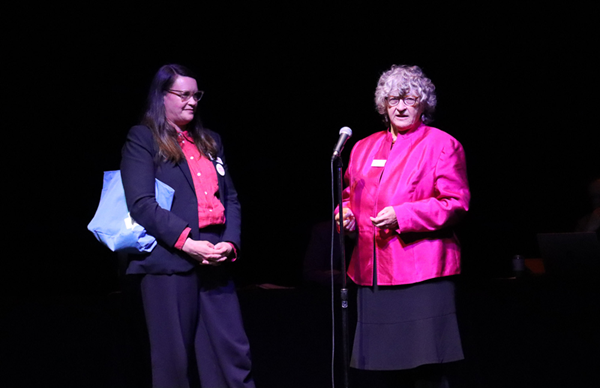
Question 7.1: Name one thing that Vancouver spends money on now that you would spend less on, and one thing that you would spend more on.
Frances Bula (OneCity – Council) - I’m going to start with what we should spend more money on and again, it has to do with water and concrete. But one of the things I love in Vancouver is that the Sustainability Department at the City has a program of creating all kinds of weirs and waterways and basins to absorb stormwater throughout the city, and I live right on the St. George Rainway, which is a beautiful, beautiful example of that. And it’s not […] a little thing; like it stops water, dirty sewer water from going into the river and into False Creek. So that’s what I would spend more money on and the […] Sustainability Department. Less money, I mean, I would love to see the Vancouver Police Department’s gadget budget and pick some things out of there. I mean, I totally support police officers doing the job they need to do, but I think the gadget budget is worth looking at.
Lucy Maloney (OneCity – Council) - My serious answer is: I would like to spend more money building affordable housing on city land. I would also like to spend money on putting bike lanes on Broadway and connecting the cycling map all over Vancouver, and on arts and culture grants. I know that I’m not really answering with one thing, but the thing I would like to spend less money on is retrenchment fees […] compensation for the staff that we’ve been firing. You know, we’ve got such amazing staff. At the moment, the culture is one of fear, and people aren’t going to be telling us where we can remove unnecessary steps, so we can streamline and reduce costs, so we can spend our money on other things, because they’re so afraid of losing their jobs. So maybe if we had a culture where we work with staff, we’d be firing fewer people and reducing costs and speeding up approvals the way we need to.
Frances Bula wins Last Candidate Standing.